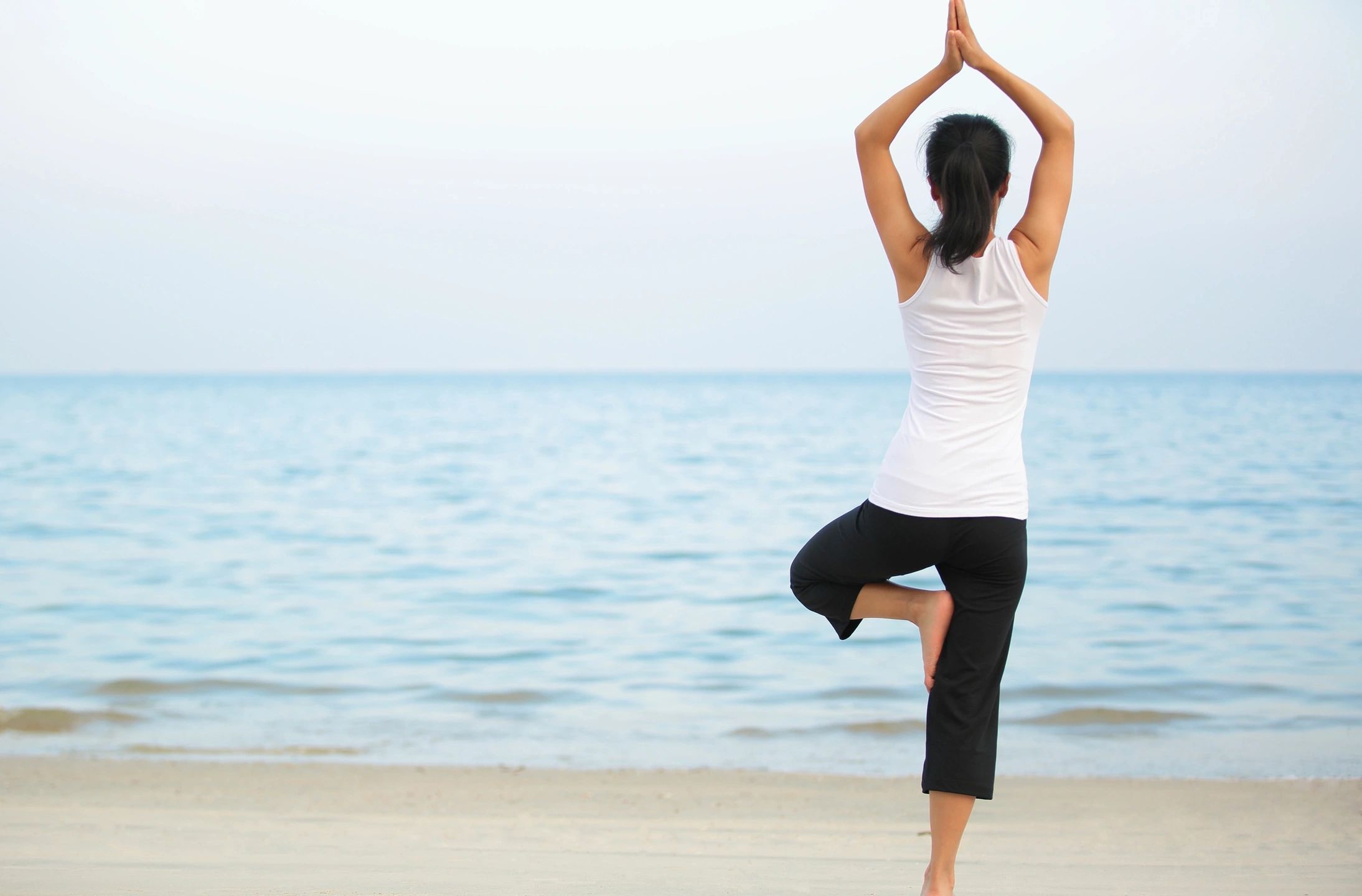
There is a moment many of my clients describe — a quiet, persistent feeling that something needs to change. Not a crisis. Not a breakdown. Just a sense that life could feel lighter, more purposeful, more theirs. If you have ever felt that way, this post is for you.
Wellness coaching is one of the most transformative tools I have ever encountered — and yet most people have never tried it, or are not quite sure what it actually involves. Today I want to change that.
Wellness coaching is a structured, supportive conversation designed to help you get clear on what you want — and what is getting in the way. It is not therapy. It is not advice-giving. And it is definitely not someone telling you what to do with your life. Instead, it is a space where you get to slow down, think out loud, and be genuinely heard — often for the first time in a long time.
A good wellness coach asks the right questions, holds space for your answers, and helps you find the clarity and motivation that is already inside you. Think of it as a guided conversation with yourself, with someone skilled at helping you hear what you are really saying.
Wellness coaching is for anyone who feels stuck, overwhelmed, or simply ready for something more. You do not need to be in crisis. You do not need to have everything figured out before you start. The people who benefit most are often those doing reasonably well on the outside — but feeling quietly exhausted, unfulfilled, or disconnected from themselves on the inside.
I have been a reflexologist for years, and I have always believed in the deep connection between the body and the mind. But over time, I noticed my clients were carrying so much more than physical tension — worry, grief, self-doubt, exhaustion. Wellness coaching gave me the tools to support the whole person, not just the physical. It is the most rewarding work I have ever done.
Right now, I am offering a completely free 20-minute wellness coaching taster session to celebrate the launch of my new website. This is not a sales call. It is a real coaching conversation — a genuine taste of what working together could feel like. Spaces are limited and the offer closes on 17th October. I would love for you to claim yours.
I notice it every single time. The moment a client walks through the door of the Radiance Reflexology Hub, something in them begins to soften. Their shoulders drop. Their breath slows. The tight, braced quality they've been carrying — sometimes for weeks, sometimes for years — starts to release before we've even begun.
I've thought a lot about why this happens so quickly, and I believe it comes down to something very simple: the space itself gives people permission. Permission to stop. Permission to put down the weight of everything they're managing, everything they're holding together, everything they're trying to be. For the next hour, none of that is required of them. They can simply be.
Relief is almost always the first thing clients describe. Not just physical relief — though that comes too — but an emotional exhale. A sense of 'I made it here. I did something for myself.' In a world that constantly asks us to give, give, give, walking through a door that says 'this time is yours' is a quietly radical act.
Then comes freedom. The freedom of an hour with no agenda, no performance, no expectations. You don't have to be productive. You don't have to be cheerful. You don't have to hold it together. The treatment room is a judgment-free zone where your only job is to receive — and for many of my clients, that is the most unfamiliar and ultimately the most healing thing of all.
Clarity tends to arrive quietly, often towards the end of a session or in the hours that follow. When the nervous system settles, when the body stops bracing, the mind follows. Thoughts that felt tangled begin to loosen. Decisions that seemed impossible become obvious. Priorities rearrange themselves naturally, without effort.
And then there is the letting go. This is the one that moves me most deeply, because it is the one my clients often didn't know they needed until it happened. Reflexology works with the body's energy pathways, gently inviting it to release what it has been holding — tension, grief, stress, old patterns that no longer serve.
If you've been feeling overwhelmed, depleted, disconnected, or simply like you've been running on empty for too long — I want you to know that this space was created for you. Not for a version of you that has it all together. For you, exactly as you are, right now. Come as you are. Leave as yourself. That is what Radiance is here for.
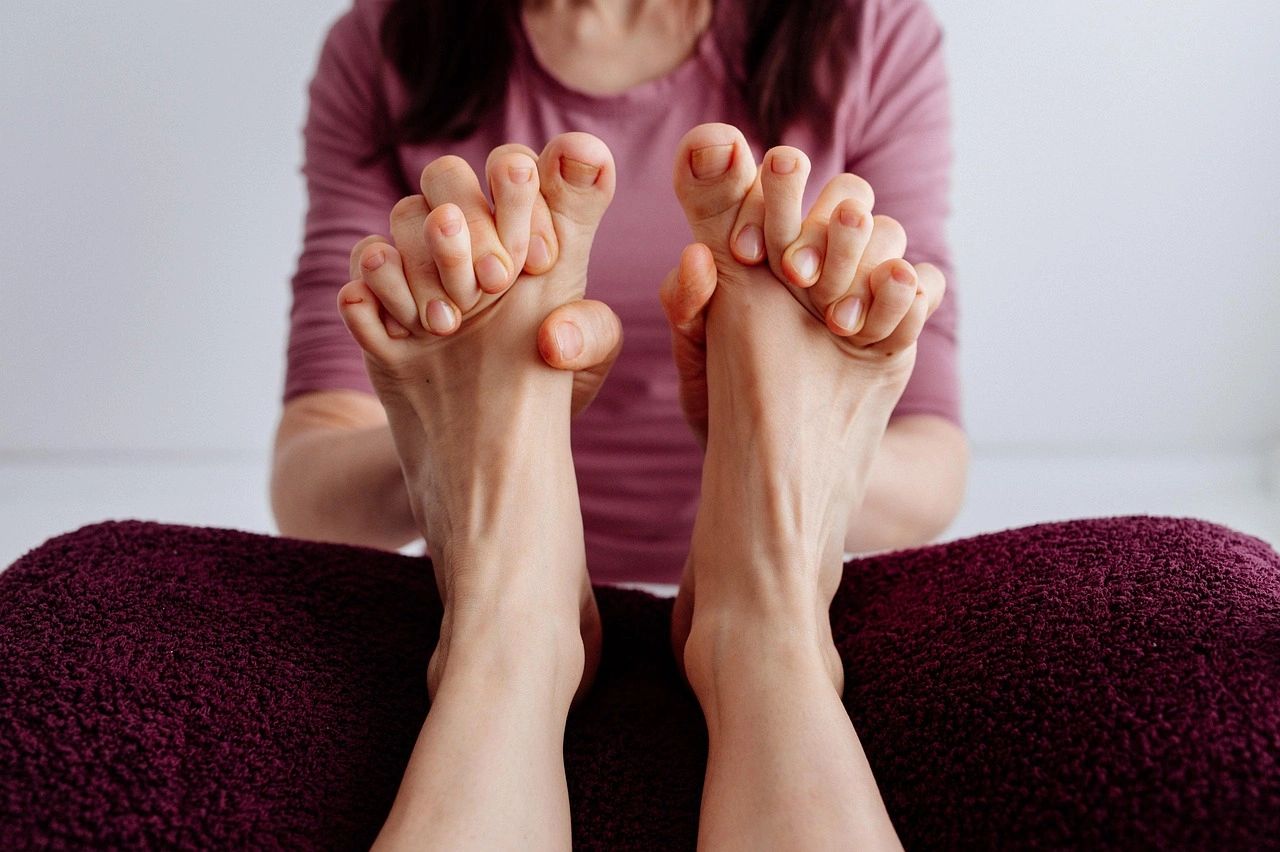
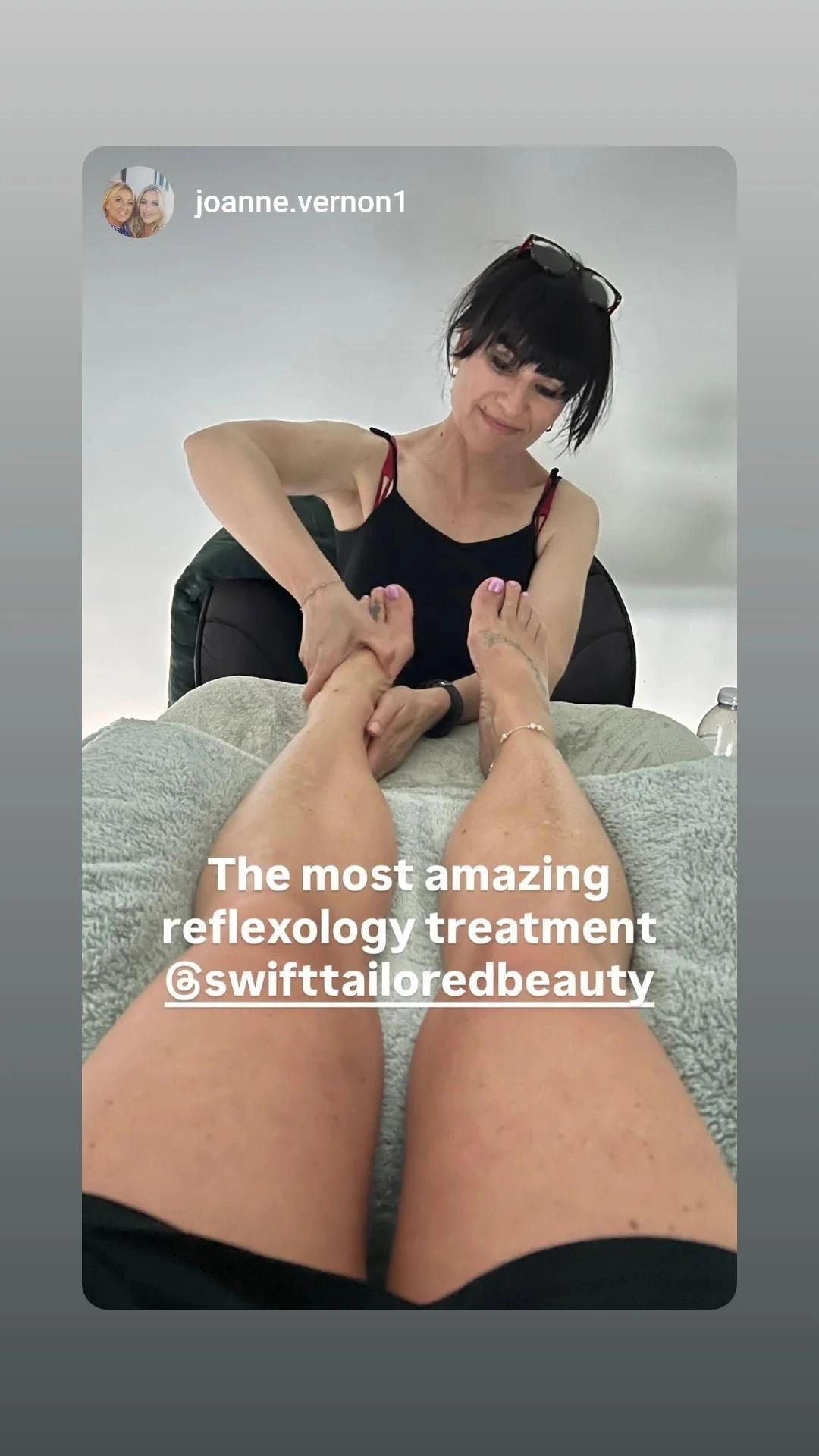
Reflexology is one of the oldest healing arts known to humanity. Rooted in the principle that specific points on the feet, hands, and ears correspond to organs, glands, and systems throughout the body, reflexology offers a gentle yet profoundly effective path to whole-body wellness.
When I work with a client, I'm not just massaging the feet — I'm reading a map. Each zone tells a story about what's happening deeper within the body. Tension in the solar plexus reflex point, for example, often mirrors the stress a person is carrying emotionally. By applying precise, nurturing pressure to these points, we invite the body to release, rebalance, and restore.
The science behind reflexology is compelling. Studies have shown that reflexology can reduce cortisol levels, improve circulation, support the lymphatic system, and activate the parasympathetic nervous system — the body's natural 'rest and digest' mode. In a world that keeps us perpetually in 'fight or flight', this shift is nothing short of transformative.
But beyond the physiology, reflexology works on a deeper level. It creates space — space to breathe, to feel, to reconnect with yourself. Many of my clients describe a profound sense of peace during and after a session, as though something they'd been holding for a very long time has finally been allowed to let go.
Whether you're dealing with chronic stress, sleep difficulties, hormonal imbalances, or simply the weight of a busy life, reflexology offers a compassionate, non-invasive way to support your body's innate wisdom. Your feet carry you through every step of your journey — it's time to let them carry you home to yourself.
Emotional intelligence — the ability to recognise, understand, and manage our own emotions while also empathising with others — is arguably the most important skill we can develop as human beings.
In my work as a wellness coach, I see the impact of emotional intelligence — and its absence — every single day. Clients who struggle with self-awareness often find themselves in the same patterns repeatedly, wondering why things never change. Those who develop their emotional intelligence, however, experience a profound shift: in their relationships, their decision-making, and their overall sense of wellbeing.
The good news is that emotional intelligence is not a fixed trait. It is a skill — and like any skill, it can be learned, practised, and strengthened. It begins with self-awareness: the ability to notice what you are feeling, when you are feeling it, without judgment. From there, it grows into self-regulation, empathy, and finally, the ability to navigate relationships with grace and wisdom.
One of the most powerful practices I share with my coaching clients is what I call the 'pause and name' technique. When you feel a strong emotion arising, pause. Name the emotion specifically — not just 'I feel bad' but 'I feel ashamed' or 'I feel afraid'. This simple act of naming activates the prefrontal cortex and literally calms the emotional brain. It is neuroscience in action.
Falling in love with your emotional intelligence means falling in love with your full humanity — the messy, beautiful, complex reality of being a feeling person in a feeling world. It is one of the greatest gifts you can give yourself, and everyone around you.
There is a cultural narrative around ageing that I find deeply unhelpful — the idea that after a certain point, life is a slow diminishment. That the best years are behind us. That we should expect less, want less, be less. I reject this narrative entirely.
In my work with clients in their 50s, 60s, and beyond, I have witnessed something remarkable: when people are given the right support, the right tools, and the right permission, they don't just maintain their vitality — they deepen it. They become more themselves. More at peace. More alive.
The foundation of longevity, in my experience, is not a supplement or a diet plan. It is a relationship with your own body — a willingness to listen to it, honour it, and respond to what it needs. This means sleep that is genuinely restorative. Movement that feels joyful rather than punishing. Nutrition that nourishes rather than restricts.
But longevity is not just physical. The research is clear: social connection, purpose, and emotional wellbeing are among the strongest predictors of a long and healthy life. People who feel connected to others, who have a sense of meaning, and who are able to process and express their emotions tend to live longer, healthier, happier lives.
Reflexology and wellness coaching, used together, offer a powerful pathway to this kind of whole-person vitality. Reflexology supports the body's systems — circulation, lymphatic drainage, nervous system regulation. Coaching supports the mind and spirit — clarity, purpose, emotional resilience. Together, they create the conditions for a life that doesn't just last longer, but feels richer, deeper, and more fully lived.
Mindfulness has become something of a buzzword in recent years — and with that popularity has come a certain amount of misunderstanding. Many people think mindfulness means emptying your mind, achieving a state of perfect calm, or sitting cross-legged for hours. It means none of these things.
At its simplest, mindfulness is the practice of paying attention to what is happening right now — in your body, your mind, and your environment — without judgment. It is the art of being here, fully, rather than half-present while your mind races ahead to tomorrow or replays yesterday.
The benefits of a regular mindfulness practice are well-documented: reduced stress and anxiety, improved focus and decision-making, better sleep, greater emotional regulation, and a deeper sense of connection to yourself and others. But perhaps the most profound benefit is one that is harder to measure: the simple experience of your own life, as it is actually happening.
I often introduce mindfulness to my coaching clients through what I call 'micro-practices' — small moments of intentional presence woven into the fabric of everyday life. The first sip of morning tea, taken slowly and with full attention. Three conscious breaths before a difficult conversation. A moment of genuine noticing — the quality of light, the sound of rain, the feeling of your feet on the ground.
These small practices, repeated consistently, begin to rewire the brain. They create new neural pathways that make presence easier, more natural, more automatic. Over time, mindfulness stops being something you do and becomes something you are — a way of moving through the world that is both more peaceful and more alive.
We live in a world that has normalised stress to an alarming degree. We wear our busyness like a badge of honour. We apologise for needing rest. We push through exhaustion as though it were a virtue. And all the while, our bodies are quietly paying the price.
Chronic stress is not just uncomfortable — it is genuinely harmful. It suppresses the immune system, disrupts sleep, impairs digestion, contributes to hormonal imbalances, and increases the risk of serious illness. It also affects our mental and emotional health, making us more reactive, less resilient, and less able to experience joy.
Reflexology offers a direct and powerful antidote to this stress cycle. By working with the reflex points on the feet, hands, and ears, reflexology activates the parasympathetic nervous system — the body's 'rest and digest' mode — and interrupts the chronic activation of the stress response. The effect is often immediate and profound: a deep physical relaxation that most clients describe as unlike anything they experience in their daily lives.
But reflexology does more than just relax the body. It also works with the emotional dimension of stress — the held tension, the suppressed feelings, the patterns of bracing and guarding that we develop over years of managing too much. In the safe, nurturing space of a reflexology session, these patterns can begin to release. Clients often describe feeling lighter, clearer, and more themselves after a treatment.
If stress has become your baseline — if you can barely remember what it feels like to be truly relaxed — I want you to know that it doesn't have to be this way. Your nervous system has an extraordinary capacity to heal and restore, given the right conditions. Reflexology is one of the most effective ways I know to create those conditions.
There is no perfect moment to begin. There is no version of yourself that is ready enough, sorted enough, or well enough to start a wellness journey. The journey begins exactly where you are — in the middle of the mess, the uncertainty, the tiredness, the longing for something more.
I know this because I have been there. Before I became a reflexologist and wellness coach, I was a woman who had lost touch with herself. I was busy, capable, and quietly exhausted. I was doing all the right things and wondering why I felt so disconnected from my own life. It was reflexology that first cracked me open — that first gave me permission to slow down and feel.
What I want you to know is this: you don't have to have it all figured out to begin. You don't have to know exactly what you need or what you're looking for. You just have to be willing to show up — for yourself, in whatever way feels possible right now.
At Radiance Reflexology & Wellness Coaching, I meet you exactly where you are. Whether you come for a single reflexology treatment or you're ready to commit to a deeper coaching journey, the experience is tailored entirely to you. There is no agenda other than your wellbeing. No timeline other than your own.
Your wellness journey starts here. Not when things calm down. Not when you have more time or more money or more energy. Here. Now. With one small, courageous step towards yourself. I will be here when you're ready.